

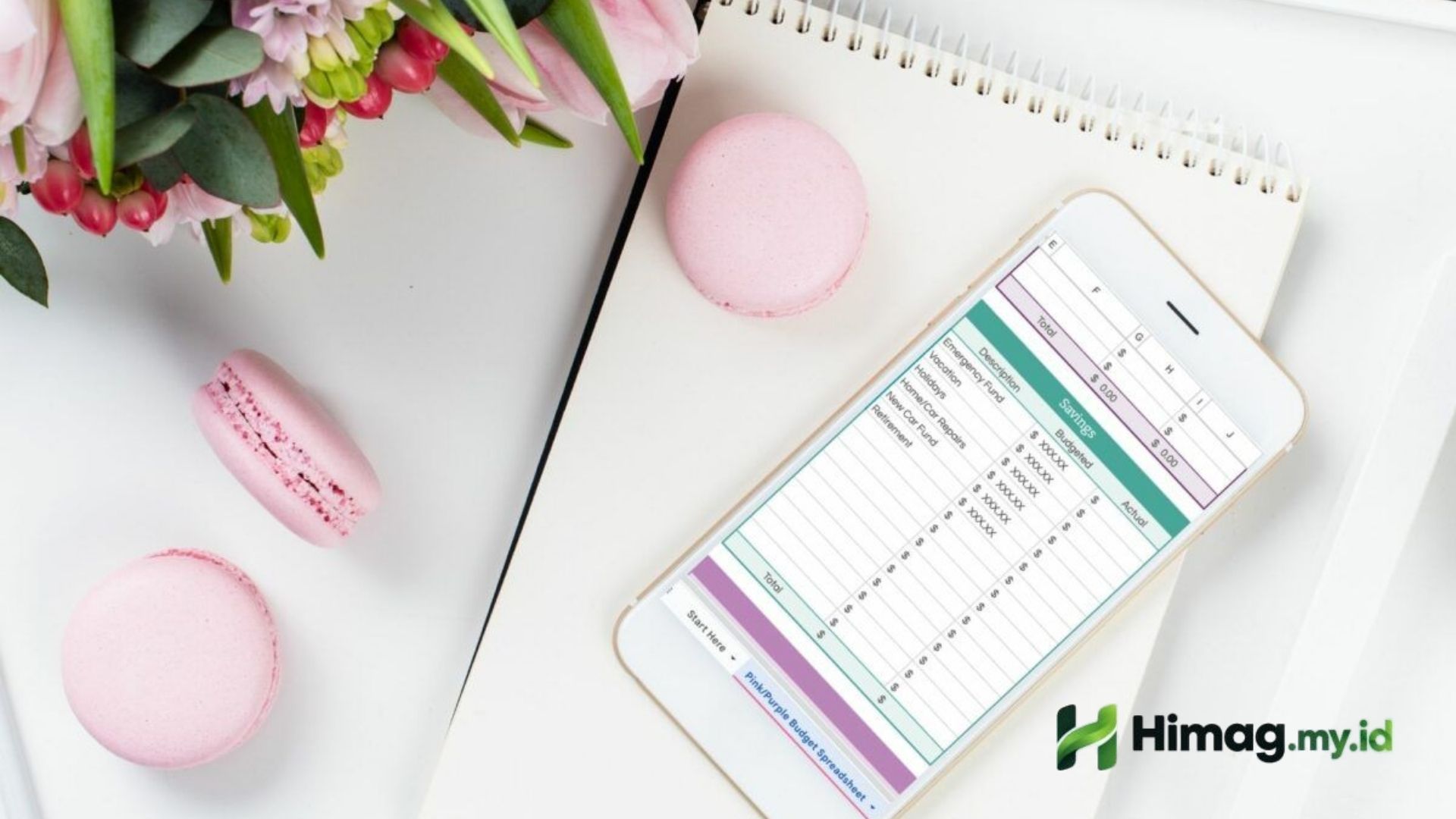
King.Himag – Managing money becomes much easier when you have a clear plan. Without one, it is easy to pay the bills, make a few purchases, and suddenly wonder where the rest of your money went.
A monthly budget planner can help solve that problem.
You do not need an advanced spreadsheet or complicated financial software to create one. A simple monthly budget planner can show how much money comes in, where it needs to go, and how much you can comfortably save or spend.
The goal is not to make every financial decision perfectly. It is to create a system that helps you stay aware of your money throughout the month.
What Is a Monthly Budget Planner?
A monthly budget planner is a tool used to organize your income and expenses for a specific month.
It usually includes several basic sections, such as:
- Monthly income
- Housing expenses
- Food and groceries
- Transportation
- Utilities
- Debt payments
- Savings
- Entertainment
- Personal spending
- Other expenses
By putting these numbers in one place, you can get a clearer picture of your financial situation.
A planner can be as simple as a handwritten list or as detailed as a spreadsheet with automatic calculations. What matters most is that you can understand it and use it consistently.
Why Use a Monthly Budget Planner?
One of the biggest advantages of a monthly budget planner is visibility.
When your income and expenses are written down, it becomes easier to see which expenses are necessary and which ones could potentially be reduced.
A monthly planner can also help you:
- Prepare for upcoming bills
- Monitor everyday spending
- Set aside money for savings
- Plan for irregular expenses
- Reduce unnecessary spending
- Work toward financial goals
- Avoid surprises at the end of the month
You do not need to track every penny forever. Even a basic overview can make your financial decisions more intentional.
Step 1: Write Down Your Monthly Income
Start your monthly budget planner with your expected income.
Depending on your situation, this could include:
- Salary
- Freelance income
- Business income
- Part-time work
- Rental income
- Other regular sources of income
If your income changes from month to month, consider using a conservative estimate rather than assuming you will earn your highest possible amount.
For people with irregular income, it can also be helpful to look at previous months and identify an average or lower-end amount that can be used for basic planning.
The objective is to create a budget based on money you reasonably expect to have available.
Step 2: List Your Fixed Expenses
Fixed expenses are costs that generally stay the same each month.
Common examples include:
- Rent or mortgage payments
- Insurance
- Internet bills
- Loan payments
- Memberships
- Certain subscription services
Write these expenses down first because they are usually easier to predict.
Once your fixed expenses are accounted for, you can see how much of your income remains for flexible expenses, savings, and other priorities.
Step 3: Estimate Your Variable Expenses
Not every expense has the same amount every month.
Groceries, transportation, electricity, dining out, and entertainment may change depending on your habits and circumstances.
Look at your previous spending to create realistic estimates.
For example, if you normally spend between $300 and $400 on groceries, creating a $150 grocery budget may not be realistic.
A useful budget reflects your actual lifestyle while still giving you room to improve your spending habits.
Step 4: Add Savings to Your Planner
Savings should have a place in your monthly plan.
Instead of simply saving whatever happens to be left at the end of the month, consider treating savings as one of your planned expenses.
You could create separate categories for different goals, such as:
- Emergency savings
- Vacation
- Home repairs
- Education
- A large purchase
- Long-term financial goals
The amount you save depends on your income, expenses, and priorities.
Even if you can only save a small amount at first, creating a regular habit can be useful.
Step 5: Include Debt Payments
If you have debt, include the required payments in your monthly budget.
Write down the minimum payment and any additional amount you plan to pay, if applicable.
Having debt listed clearly can make it easier to understand how much of your monthly income is already committed.
If you plan to make extra payments, make sure your budget still leaves enough money for essential expenses and other financial needs.
For decisions involving significant debt, interest rates, or refinancing, consider checking the specific terms of your accounts or speaking with a qualified financial professional.
Step 6: Create a Category for Flexible Spending
A budget does not need to eliminate everything enjoyable.
Give yourself some room for spending on things you value.
This might include:
- Restaurants
- Coffee
- Movies
- Hobbies
- Shopping
- Games
- Social activities
- Personal care
Having a specific category for flexible spending can actually make budgeting easier.
Instead of wondering whether you can afford something every time you want to spend money, you can check the amount remaining in that category.
Step 7: Plan for Irregular Expenses
Some expenses do not appear every month, but they can still have a significant impact on your finances.
Examples include:
- Annual insurance
- Vehicle maintenance
- Holiday expenses
- School-related costs
- Property repairs
- Membership renewals
- Birthdays and special occasions
A monthly budget planner can help you prepare for these expenses ahead of time.
For example, if you expect an annual expense of $600, you could set aside approximately $50 each month.
When the payment eventually arrives, you already have money allocated for it.
A Simple Monthly Budget Planner Example
Here is an example of what a basic monthly budget might look like:
| Category | Planned | Actual |
|---|---|---|
| Monthly Income | $3,500 | $3,500 |
| Housing | $1,000 | $1,000 |
| Groceries | $400 | $425 |
| Transportation | $250 | $230 |
| Utilities | $300 | $315 |
| Debt Payments | $300 | $300 |
| Savings | $500 | $500 |
| Entertainment | $200 | $175 |
| Personal Expenses | $250 | $275 |
| Other Expenses | $150 | $125 |
The Planned column represents what you expect to spend.
The Actual column shows what you really spent.
This comparison is useful because it helps you understand your spending patterns instead of simply guessing what happened during the month.
Planned vs. Actual Spending
One of the most useful features of a monthly budget planner is comparing planned expenses with actual expenses.
Suppose you planned to spend $300 on groceries but ended up spending $350.
That does not automatically mean your budget failed.
Instead, ask why the difference occurred.
Maybe grocery prices increased, you hosted guests, or you simply underestimated your normal spending.
After identifying the reason, you can adjust next month’s budget.
Budgeting works better when you treat it as a learning process rather than a strict test that you either pass or fail.
How to Keep Your Monthly Budget Planner Simple
A common mistake is making a budget too complicated.
You do not necessarily need separate categories for every small purchase.
Start with a few broad categories and add more only when they provide useful information.
For example, instead of tracking every type of food separately, you could simply use a Groceries category.
Instead of having separate categories for every type of entertainment, you could use one Entertainment category.
The best planner is one that you will actually use.
Use a Weekly Check-In
You do not have to wait until the end of the month to review your budget.
A quick weekly check-in can help you stay on track.
Spend a few minutes checking:
- How much have I spent so far?
- Which categories are getting close to their limits?
- Are there any upcoming bills?
- Have I saved the amount I planned?
- Do I need to adjust my spending for the rest of the month?
This simple habit can help you identify problems early rather than discovering them after the month is over.
What to Do When You Go Over Budget
Almost everyone goes over budget occasionally.
Unexpected expenses happen, and sometimes your original estimates are simply wrong.
Instead of abandoning your budget, review what happened.
If one category is higher than expected, check whether another category has room to adjust.
For example, if you spent more than expected on groceries but have not used your entertainment budget, you might choose to reduce discretionary spending for the remainder of the month.
However, do not constantly move money between categories without understanding the reason. If the same category is over budget every month, your original estimate may need to be changed.
Monthly Budget Planner for Couples
Couples may benefit from creating a shared monthly budget.
Start by listing household income and shared expenses.
Then decide how you want to handle personal spending.
Some couples prefer to combine most of their finances, while others keep separate accounts and contribute a specific amount toward shared expenses.
There is no single system that works for every relationship.
The important part is having clear communication about household bills, savings goals, debt, and discretionary spending.
Monthly Budget Planner for Families
Family budgeting often requires additional categories.
Depending on your circumstances, you may need to plan for:
- Childcare
- School expenses
- Groceries
- Transportation
- Healthcare
- Activities
- Clothing
- Family entertainment
- Household maintenance
Family expenses can also change throughout the year.
A monthly planner makes it easier to adjust your budget when circumstances change rather than relying on the same numbers every month.
Digital vs. Paper Budget Planners
You can use either a digital or paper planner.
A paper planner can be useful if you enjoy writing things down and want something simple and easy to access.
A spreadsheet is useful when you want automatic calculations, monthly comparisons, or more detailed tracking.
A budgeting app may be convenient if you prefer managing your finances from your phone.
There is no universally correct choice.
Choose the format that makes you most likely to review your budget regularly.
A Simple Monthly Budgeting Routine
If you are new to budgeting, try this routine at the beginning of each month:
1. Check Your Income
Write down how much money you expect to receive.
2. List Your Fixed Bills
Add rent, utilities, debt payments, subscriptions, and other regular expenses.
3. Estimate Variable Expenses
Set reasonable amounts for groceries, transportation, entertainment, and other flexible categories.
4. Allocate Money to Savings
Decide how much you want to save based on your current financial situation.
5. Check Upcoming Expenses
Look for birthdays, annual bills, repairs, travel, or other expenses that may occur during the month.
6. Review Your Budget Weekly
Make small adjustments when necessary.
7. Review the Month
At the end of the month, compare your plan with your actual spending.
This entire process can become a simple monthly habit.
Monthly Budget Planner Checklist
Before starting a new month, make sure you have:
- Listed expected income
- Added fixed expenses
- Estimated variable expenses
- Included debt payments
- Planned savings
- Checked upcoming irregular expenses
- Set aside money for personal spending
- Reviewed the previous month’s spending
- Adjusted categories when necessary
Keeping the process simple makes it easier to stay consistent.
Final Thoughts
A monthly budget planner is not about controlling every decision you make with your money. It is about creating a clear picture of your finances so you can make those decisions with more confidence.
Start with your income, list your essential expenses, include savings and debt payments, and leave some room for flexible spending.
Then review your actual spending and use what you learn to improve next month’s plan.
Your first budget may not be perfect, and that is completely fine. The more you use your monthly budget planner, the better you can understand your spending habits and build a system that works for your everyday life.